
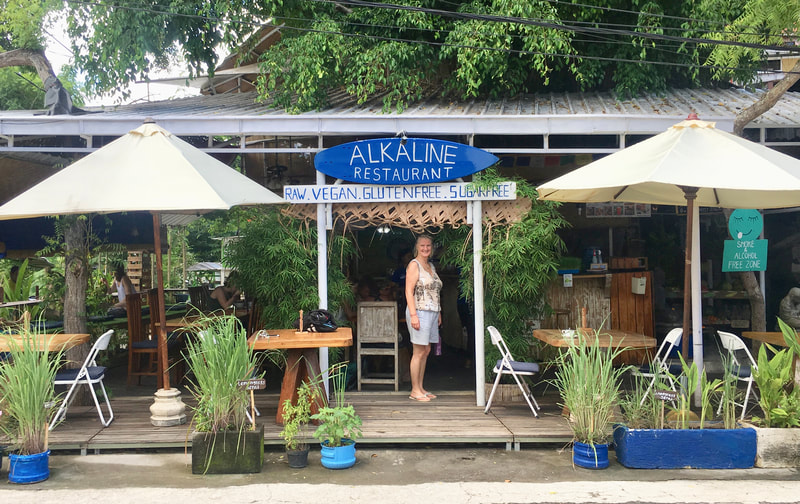
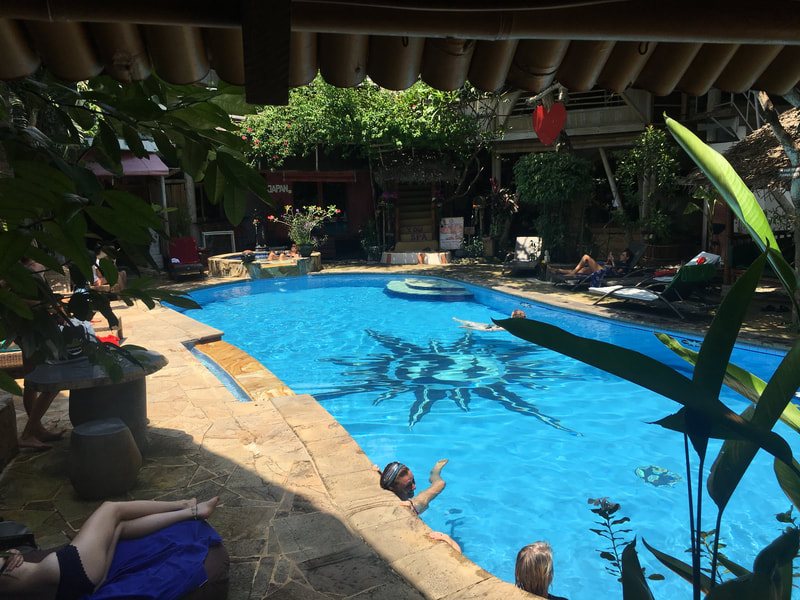
For $NZ 40 a night (25 Euros) Jolanda and I have a room at Serenity Eco Resort with ensuite, fan and air conditioning right beside the swimming pool. Breakfast also included. Guests here probably end up spending much more with the choice of eight different yoga classes every day, at $NZ 11 per class. Or there is the hugely popular Alkaline restaurant, attached to the resort, offering a massive vegan, gluten free and raw selection. The juices are amazing. If you are thinking of coming here, book ahead – its super popular.
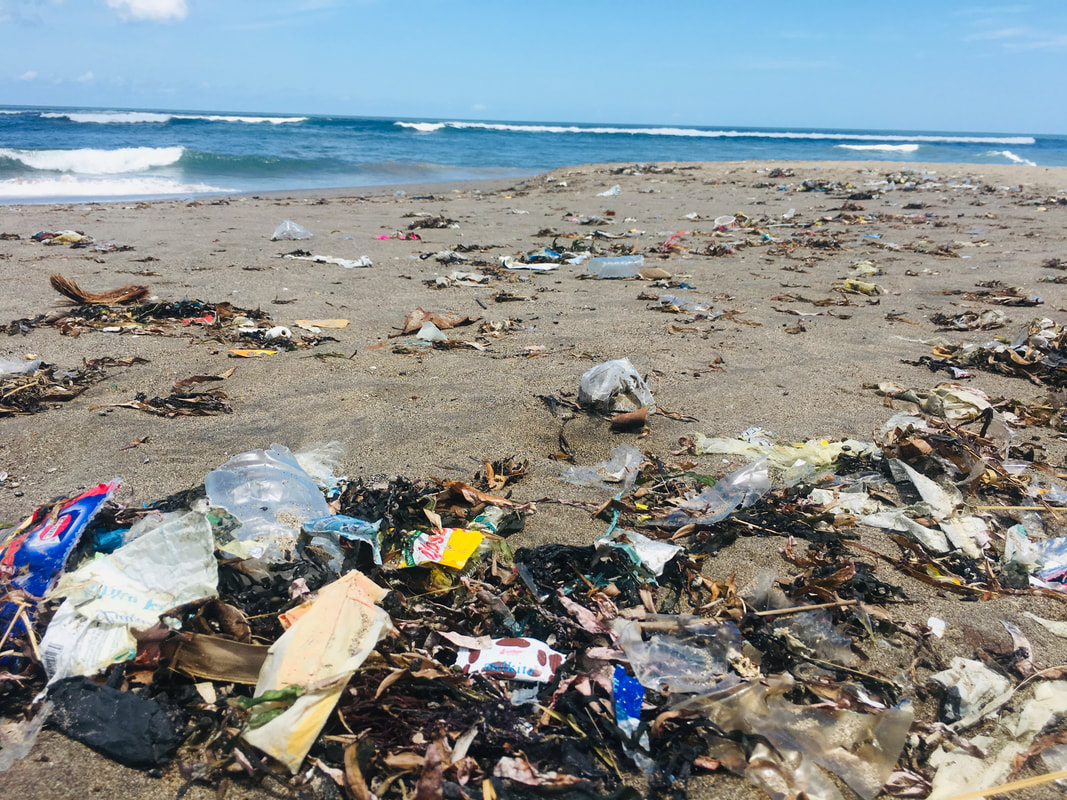
It’s beautiful here and the people, like everywhere in Bali, chilled, friendly and genuine. However, there is one negative in my view – and it’s a big one. And that is the vast amount of plastic pollution, particularly on the beaches. Perhaps it has improved marginally since our last visit, but it’s hard to tell.
By chance I spotted an article on Facebook the other day answering one of the questions I have always wondered about. Where does all the plastic in the sea come from. I know that we don’t willy-nilly chuck our rubbish in the sea and I’m pretty sure neither would the vast majority of New Zealanders. So, who does it?
The World Economic Form claims that 90% of plastic polluting our oceans comes from just ten rivers. And they are: the Yangzte, Indus, Yellow, Hai He, Ganges, Pearl, Amur, Mekong, Nile and Niger.
Eight river systems in Asia and two in Africa. If you went further to list the top twenty, four Javanese rivers would apparently qualify. The rivers reportedly had two things in common: a relatively high population living close to the river combined with a poor waste management process. Of the ten, the biggest culprit by far is apparently the Yangzte river basin, home to a staggering 500 million people. To be fair to China however, while they are the biggest polluter they are also (according to the UN Environment Programme) making major efforts to get better. Well I will believe it when I see it . . .
The amount of plastic in our oceans is, frankly, quite frightening. A 2016 report from sailor Dame Ellen McCarthur suggests that by 2050 there may be more plastic in the sea than fish. Incredible as it sounds, around 8,000,000 tonnes of plastic per year is finding its way to the ocean – equivalent to a garbage truck dumping its load every minute. In a 2018 article, published in Britain’s Daily Mail, plastic particles have been found in three out of every four deep sea fish in the North West Atlantic. That’s the stuff we eat and it’s not right.
I don’t want to be unfair on Bali. There are of course moves to do something about the problem – my personal favourite of which is the effort by two girls Melati and Isabel Wijsen who attended the Green School here in Bali. Check it out – I defy you not to be inspired by these two . . .
Off to Barcelona the day after tomorrow . . .
0 Comments